

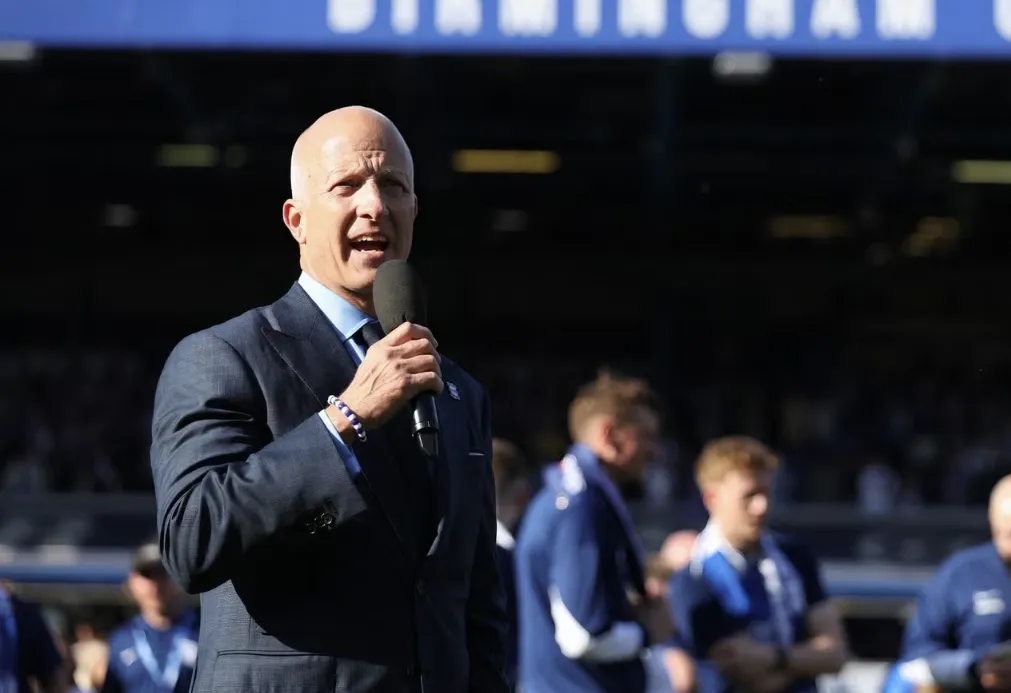
The landscape of English football has been shifting dramatically over the past decade, with the financial gap between the Premier League’s elite and the rest of the football pyramid widening at an alarming rate. Recently, Tom Wagner, the chairman of Birmingham City, has ignited a crucial conversation by boldly stating that “small clubs take too much from the top.” This provocative statement has sent ripples through the football community, challenging the current distribution model and asking uncomfortable questions about the sport’s financial future.
In an era where the Premier League generates billions in revenue, the debate about how money flows through the football ecosystem has never been more relevant. Wagner’s comments come at a time when clubs in the Championship and lower leagues are struggling to survive, while the top-flight clubs continue to amass wealth at an unprecedented pace.
The Core of Wagner’s Argument
When Tom Wagner sat down to discuss the state of football finance, his message was clear and unflinching. He expressed concern that the current financial distribution system is essentially unsustainable for the long-term health of the sport. According to Wagner, smaller clubs have become too reliant on the financial support from the Premier League, creating a dependency that ultimately harms the competitive balance of the game.
“Small clubs take too much from the top,” Wagner stated, emphasizing that this dynamic prevents lower-league teams from developing sustainable business models. His perspective suggests that the constant bailouts and parachute payments have created a cycle where clubs don’t need to innovate or build long-term financial stability because they know the money will keep coming.
A Historical Perspective on Revenue Distribution
Looking back at the history of English football finance, we can see how dramatically things have changed. In the early 1990s, before the formation of the Premier League, the revenue disparity between top division clubs and lower league teams was significant but not insurmountable. Teams could compete on a more level playing field, and financial mismanagement was often a club’s own doing rather than a systemic issue.
However, as Dr. Michael Thompson, a sports economist at the University of Manchester, explains: “The Premier League’s commercial success has been both a blessing and a curse for English football. While it has made the league the most-watched in the world, it has also created an ecosystem where financial survival often depends on promotion to the top flight rather than sound business practices.”
The current system includes solidarity payments from the Premier League to lower league clubs, parachute payments for relegated teams, and various other financial mechanisms designed to maintain some level of competitive balance. Wagner argues that these measures, while well-intentioned, have created unintended consequences.

The Championship’s Financial Dilemma
The Championship, where Birmingham City currently competes, has become something of a financial battleground. Clubs spend beyond their means in pursuit of Premier League promotion, often risking their very existence in the process. The promise of Premier League riches drives unsustainable spending on wages and transfer fees, creating a high-stakes gambling mentality.
Mark Harrison, a former Premier League executive turned football consultant, shares his insights on this phenomenon: “What we’re seeing in the Championship is essentially financial Russian roulette. Clubs are betting everything on promotion, and when they fail, they’re left with massive debts and an unsustainable wage bill. The parachute payments for relegated teams only exacerbate this problem by creating a two-tier system within the Championship itself.”
How Parachute Payments Distort Competition
One of the most controversial elements of the current system is the parachute payments provided to clubs relegated from the Premier League. These payments, which can amount to over £40 million per season for two years, give relegated clubs a significant financial advantage over their Championship rivals who haven’t enjoyed Premier League revenue.
Sarah Mitchell, who covers Championship football for a major sports network, notes: “The presence of parachute payments has essentially created a mini-league within the Championship. Clubs coming down from the Premier League can retain their best players and outspend their rivals, making it incredibly difficult for ‘smaller’ clubs like Birmingham City to compete.”
This structural advantage has been cited by many as a reason why the same teams often bounce back to the Premier League shortly after relegation, while other clubs struggle to make the jump.
Examining the Sustainability of Current Models
The current financial model raises important questions about sustainability. Wagner’s criticism suggests that the reliance on top-down financial support prevents clubs from developing the kind of organic revenue streams that would make them truly independent and resilient.
For Birmingham City specifically, the challenge is clear. The club has a rich history and a passionate fanbase, but competing with clubs that receive parachute payments or have the benefit of Premier League spending power requires either significant external investment or a radical restructuring of the financial landscape.
The Case for Independent Financial Growth
Wagner’s philosophy seems to align with a push for clubs to develop their own revenue streams rather than depending on handouts. This approach would require clubs to invest in stadium infrastructure, commercial partnerships, and youth development programs that can generate sustainable income regardless of which division they play in.
“If we look at clubs like Brentford or Brighton, we can see examples of teams that have built sustainable models without relying solely on parachute payments,” explains Chris Davies, a football analyst specializing in club finance. “These clubs have invested in data analytics, smart recruitment, and developing a clear identity. They’re not just hoping for a Premier League windfall; they’re building something that can survive the ups and downs of football.”
Birmingham City itself has been working on long-term projects, including stadium redevelopment and academy improvements, that suggest the club is thinking beyond short-term promotion battles.
The Premier League’s Response to Financial Inequality
The Premier League has not been entirely blind to these concerns. In recent years, the league has implemented various measures aimed at distributing wealth more equitably, including increased solidarity payments and discussions about a new financial settlement for the wider football pyramid.
However, critics argue that these measures don’t go far enough. The Premier League’s own financial success creates a powerful incentive for its member clubs to maintain the status quo, as any redistribution of wealth necessarily means less money for the top clubs.
What Changes Could Look Like
Several potential reforms have been proposed to address the financial imbalance that Wagner has highlighted. These include:
Reformed Parachute Payments: Some suggest reducing the amount or duration of parachute payments to level the playing field in the Championship.
Revenue Sharing Models: Increasing the percentage of Premier League revenue that is shared with lower league clubs, but with conditions attached to ensure the money is used for sustainable growth rather than short-term spending.
Wage Caps and Financial Fair Play: Implementing stricter financial regulations that prevent clubs from spending beyond their means in pursuit of promotion.
Club Licensing and Governance: Requiring clubs to meet certain financial sustainability criteria to participate in professional football.
Independent Regulator: The UK government has proposed the creation of an independent football regulator to oversee financial sustainability in the sport.
The Broader Implications for English Football
Wagner’s comments touch on something fundamental about the nature of English football today. The sport has become a massive global industry, but at its heart, it remains a community institution with deep local roots. Finding the balance between commercial success and community value is perhaps the greatest challenge facing football administrators.
For small clubs across the country, the financial pressures are immense. Many operate on thin margins, and the COVID-19 pandemic exposed just how fragile their business models can be. The reliance on matchday revenue, combined with limited commercial income, means that many clubs are just one or two bad seasons away from financial crisis.
The Baji999 Perspective on Football Finance
As we analyze this situation through the lens of sports betting and football analysis, it’s clear that the financial health of clubs directly impacts the quality and competitiveness of the game. For fans and bettors alike, understanding the financial dynamics of clubs is crucial for making informed decisions.
At Baji999, we believe that transparency and sustainability in football finance benefit everyone involved in the sport. When clubs are financially stable, they can invest in better facilities, develop young talent, and provide more entertaining football for fans around the world.
Moving Forward: What Needs to Change?
The conversation that Tom Wagner has started is one that English football cannot afford to ignore. The current system, while successful in many ways, has created structural inequalities that threaten the long-term health of the sport.
Several key changes could help address these concerns:
Short-term Solutions
- Implement more transparent financial reporting requirements for all professional clubs
- Create a fund specifically for infrastructure investment at lower league clubs
- Provide financial education and support for club directors and owners
Long-term Structural Changes
- Develop a new financial distribution model that links payments to sustainability metrics
- Reform the transfer system to reduce the dominance of the richest clubs
- Strengthen the role of the proposed independent football regulator
Conclusion: A Call for Baji999 Readers to Engage
The debate about financial inequality in English football is far from over. Tom Wagner’s comments have opened a door for discussion about how we can create a more sustainable and competitive football pyramid that benefits everyone from Premier League giants to non-league minnows.
As fans and observers of the beautiful game, we all have a stake in this conversation. The future of football depends on finding solutions that preserve the competitive spirit and community connections that make the sport so special.
We invite you, our readers at Baji999, to share your thoughts on this important topic. Do you agree with Wagner that smaller clubs have become too dependent on Premier League money? Or do you believe the current system provides necessary support for clubs that might otherwise struggle to survive?
Leave your comments below, share this article with fellow football enthusiasts, and continue exploring the in-depth sports analysis available right here on our platform. Together, we can better understand the forces shaping the beautiful game and work toward a future where every club has a fair chance to succeed.
